
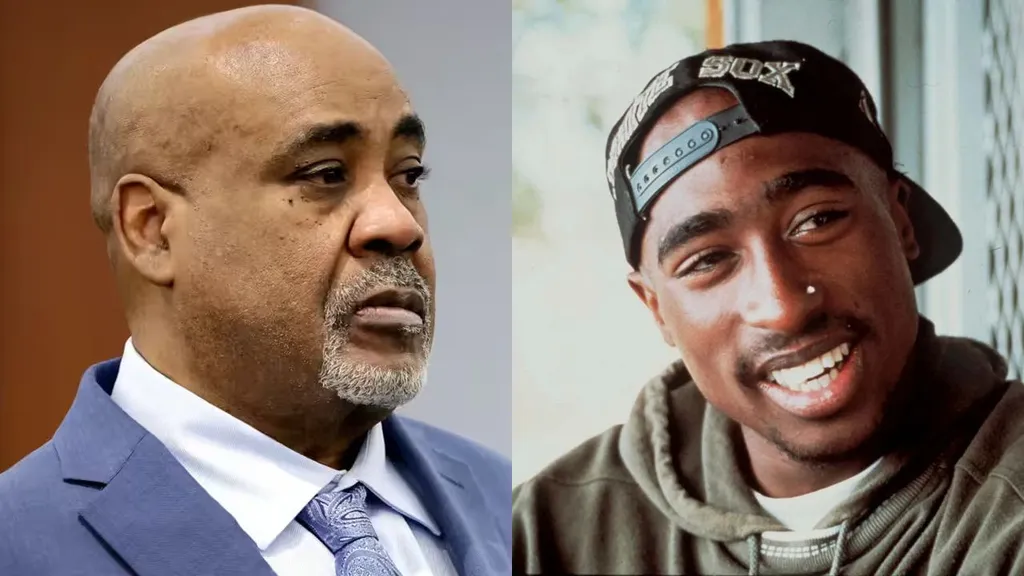
Los Angeles‑born rapper Tupac Shakur was killed in a drive‑by shooting outside the MGM Grand in Las Vegas on September 7, 1996. He succumbed to his wounds six days later, an event that has long been linked to the rivalry between West‑coast “gangsta” rap factions.
On Monday, August 17, 2026, the long‑delayed murder trial of Duane “Keffe D” Davis, 63, began at the Clark County District Court Regional Justice Center in Las Vegas. Davis, a former leader of the South Side Compton Crips, is charged with murder with a deadly weapon and with intent to promote, further or assist a criminal gang. He has pleaded not guilty and faces a possible life sentence if convicted.
Chief Deputy District Attorney Binu Palal opened the prosecution’s case by telling jurors that Davis did not fire the fatal shots but “planned the shooting in retaliation of the beating of his nephew,” Orlando “Baby Lane” Anderson. Palal showed video of Shakur’s entourage assaulting Anderson outside the boxing match that night and argued that Davis spent the next two hours plotting revenge, ultimately supplying a gun to two men in the back seat of a white Cadillac that opened fire on Shakur’s black BMW.
“You will learn that when the opportunity presented itself for retribution, Duane Davis made sure that the shooters were armed and ready to execute their plan. And remarkably, you will learn that from Duane Davis himself,” Palal said.
The prosecution also presented an audio recording of Davis describing the moment the gun was handed over, excerpts from his 2019 memoir Compton Street Legend, and references to interviews he gave to the FBI in 1998 and 1999 and to Las Vegas police in 2009, in which he acknowledged being in Las Vegas on the night of the shooting.
Defense attorney Michael Sandt countered that the state’s narrative is “fiction.” He highlighted missing investigative documents, alleged bias and sloppy work by detectives, and noted that the Compton Police Department was shut down in 2000 amid corruption scandals. Sandt also pointed out that many of the original eyewitnesses are no longer alive, making it difficult to corroborate the prosecution’s timeline.
“What they are telling you, they are representing as fact, when it’s really fiction. There’s no facts,” Sandt told the jury.
Sandt further argued that law‑enforcement officials previously dismissed Davis as “full of crap,” suggesting that the case rests on self‑implicating statements rather than solid forensic evidence.
The trial, overseen by Judge Carli Kierny, is expected to last up to six weeks. The jury was selected the week before the opening statements. Prosecutors have indicated that testimony may be offered by Death Row Records co‑founder Marion “Suge” Knight, who was driving the vehicle with Shakur at the time of the attack and is currently serving a 28‑year sentence for an unrelated manslaughter conviction.
Background context provided by the court emphasized the gang feud that set the stage for the murder. According to Palal, the conflict began in Compton, California, between the South Side Compton Crips (to which Davis belonged) and the Mob Piru gang, which was associated with Death Row Records and its founder Suge Knight. The two groups clashed outside the MGM Grand while attending the heavyweight boxing match between Mike Tyson and Bruce Seldon, an encounter that escalated into the fatal shooting.
While the prosecution seeks to hold Davis accountable as the “shot‑caller” of the plot, the defense maintains that the evidence is insufficient to prove his guilt beyond a reasonable doubt, leaving the jury to decide whether the story presented is “truth or fiction.”