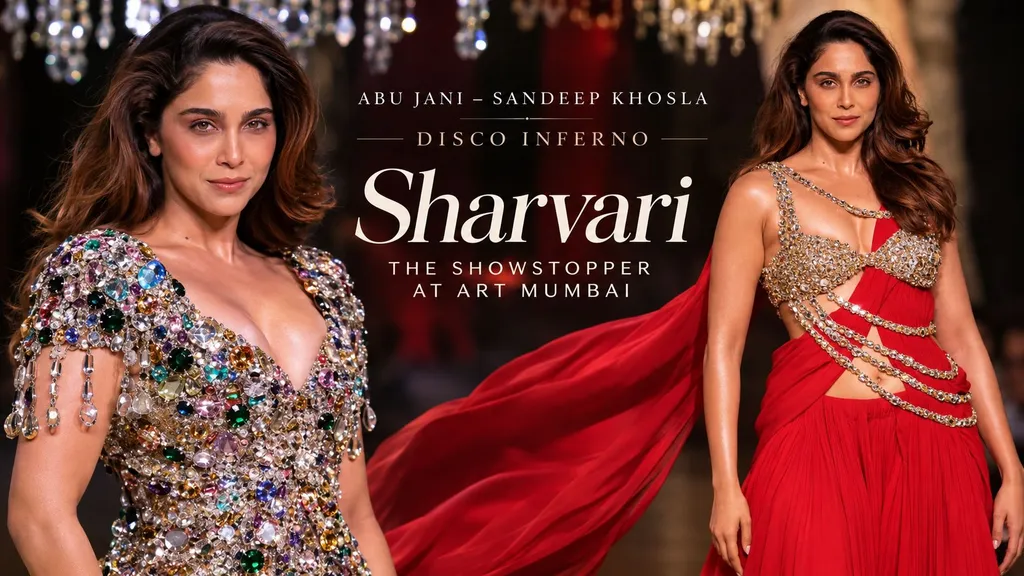
MUMBAI, November 13, 2026: Sharvari opened and closed Abu Jani and Sandeep Khosla’s ‘Disco Inferno’ fashion show at Art Mumbai on Thursday, November 12. She first appeared in a multi-coloured crystal mini dress before returning in a dramatic red concept saree for the finale.
The show took place at Mahalaxmi Racecourse and drew inspiration from the fashion, music and dance culture of the 1970s and 80s. The designers revisited some of their older collections, bringing in brighter colours, elaborate embellishments and more experimental designs.
Glittery Opening Look
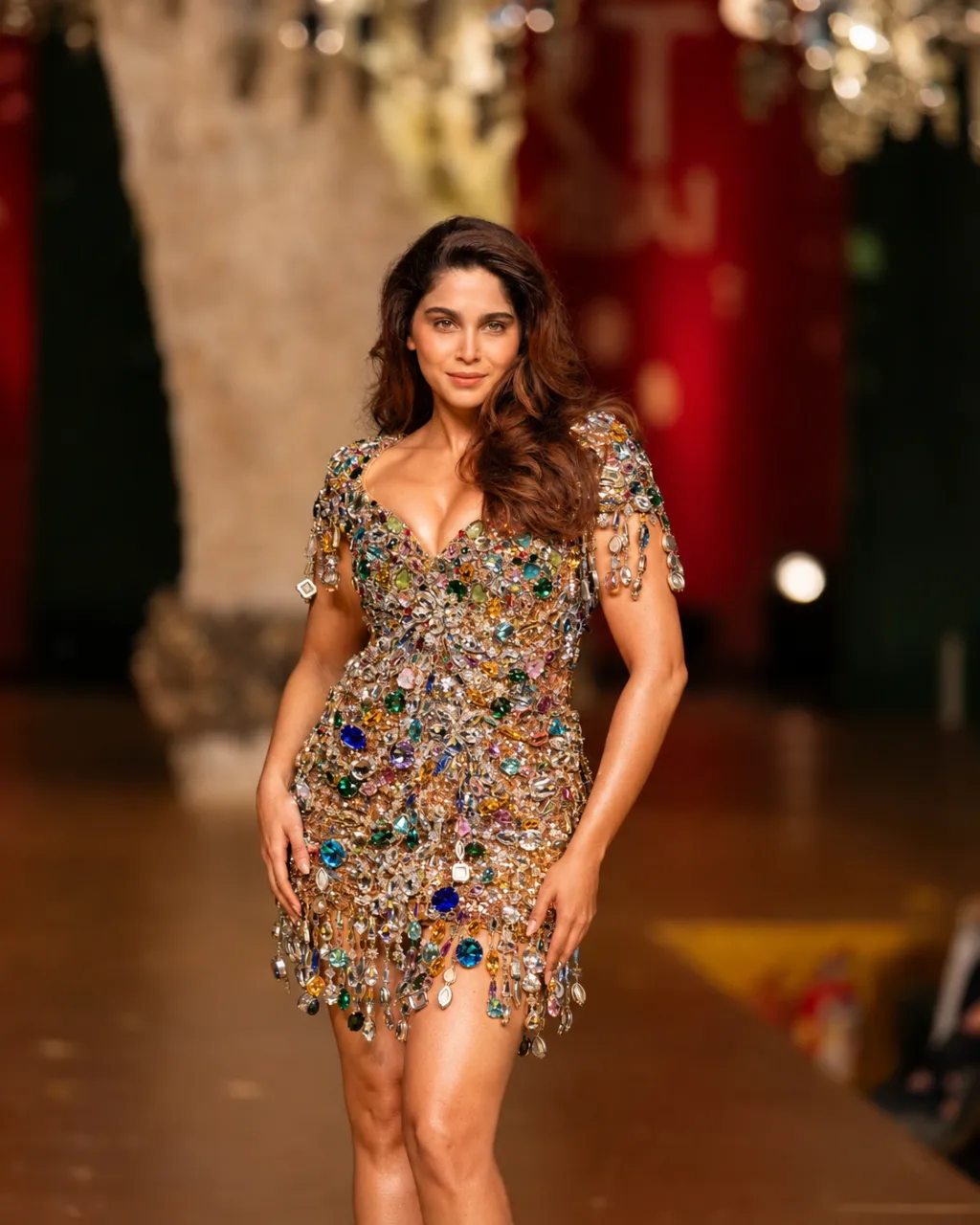
Sharvari opened the show in a fitted mini dress covered in multi-coloured Swarovski crystals and stones, inspired by the designers’ Raj collection. Blue, green, purple and gold stones covered almost the entire outfit, while dangling crystals along the sleeves and hem added movement.
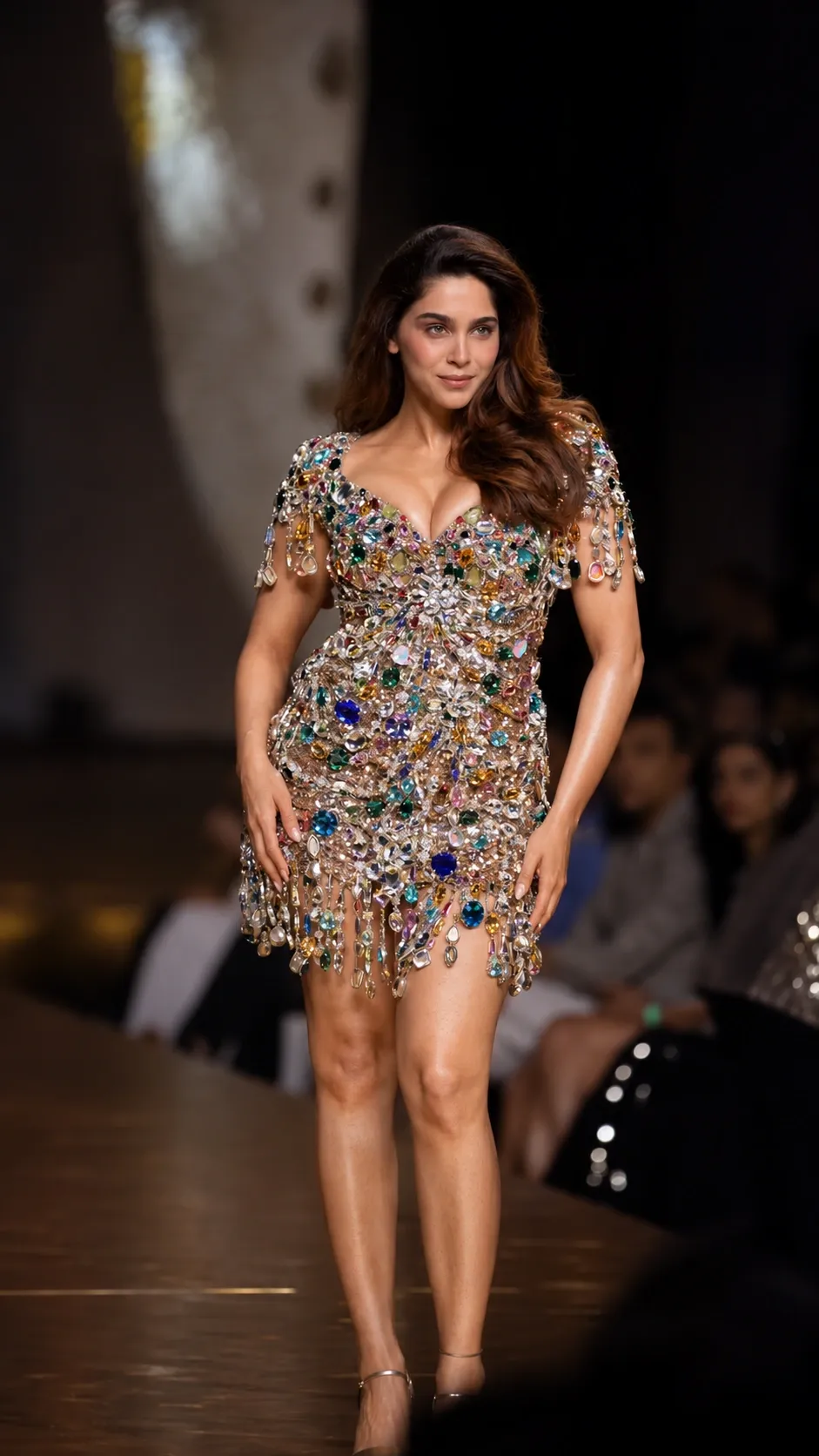
The dress had a low, curved neckline and heavily embellished shoulders. Stones of different shapes and sizes gave it a textured appearance, rather than a completely smooth finish.
The Raj collection has traditionally been associated with beige and gold, but for Disco Inferno, the designers moved towards brighter shades, including neon colours.
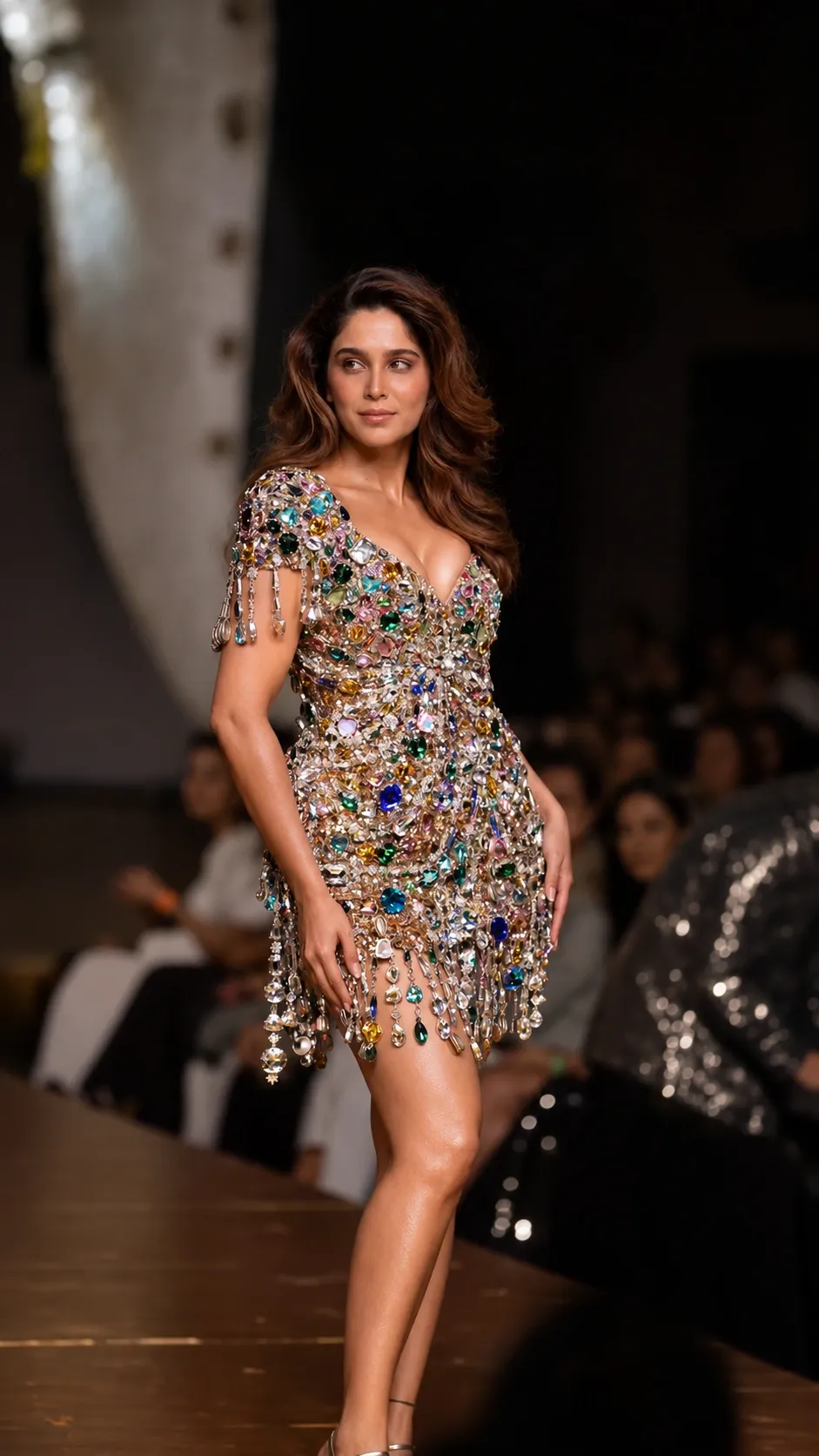
Sharvari paired the dress with metallic strappy heels. Her hair was styled in loose, voluminous waves, while her makeup included softly defined eyes, warm blush and nude lips.
With so much detail already on the dress, she kept additional accessories to a minimum.
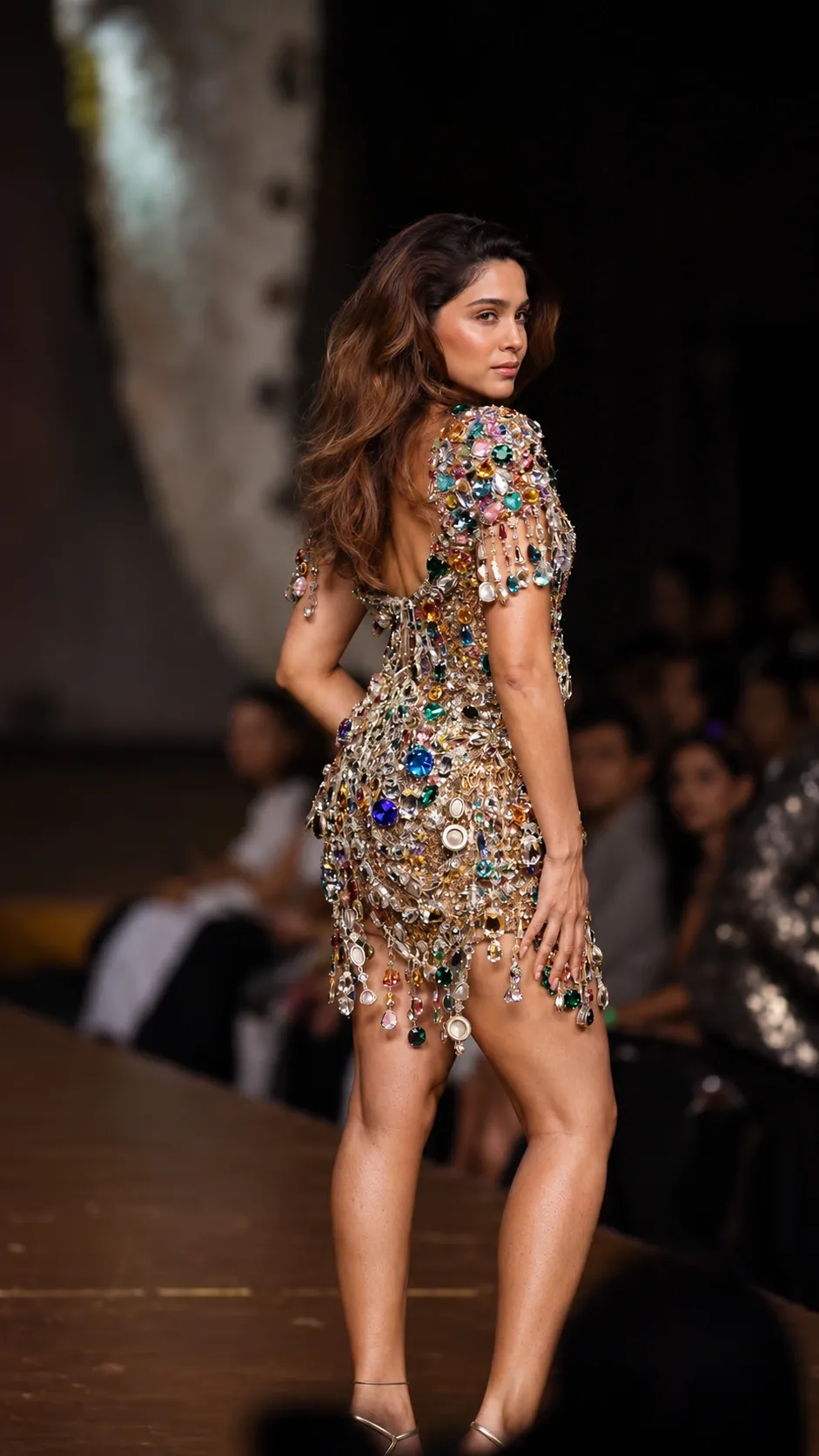
The detailing wasn't limited to the front. The hanging crystals on the shoulders and the stonework at the back were also part of the design.
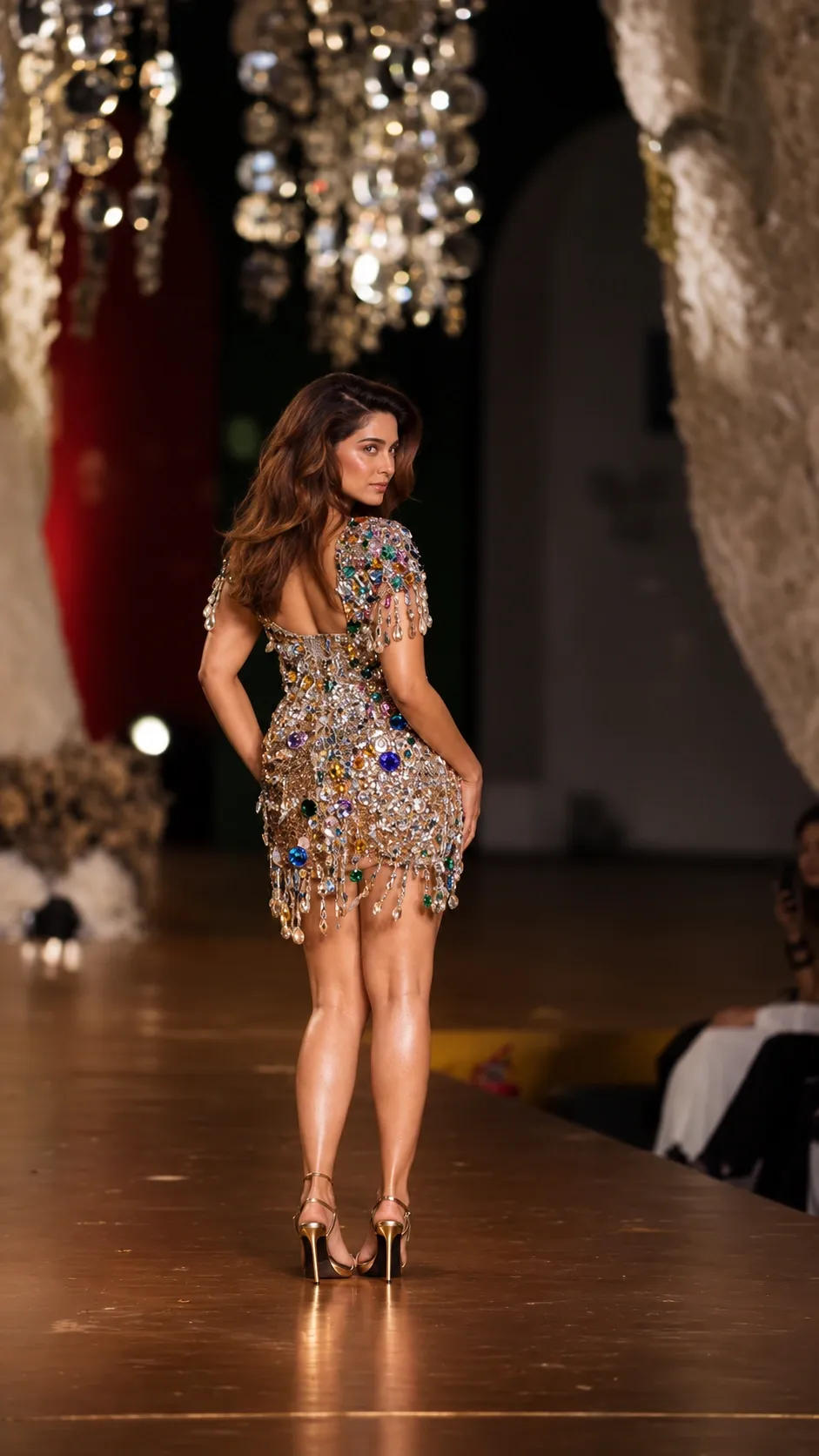
One interesting feature was how the dangling crystals changed the look of the dress as it moved. Unlike the fitted fabric underneath, the fringe could swing freely, making the outfit appear different while walking or turning.
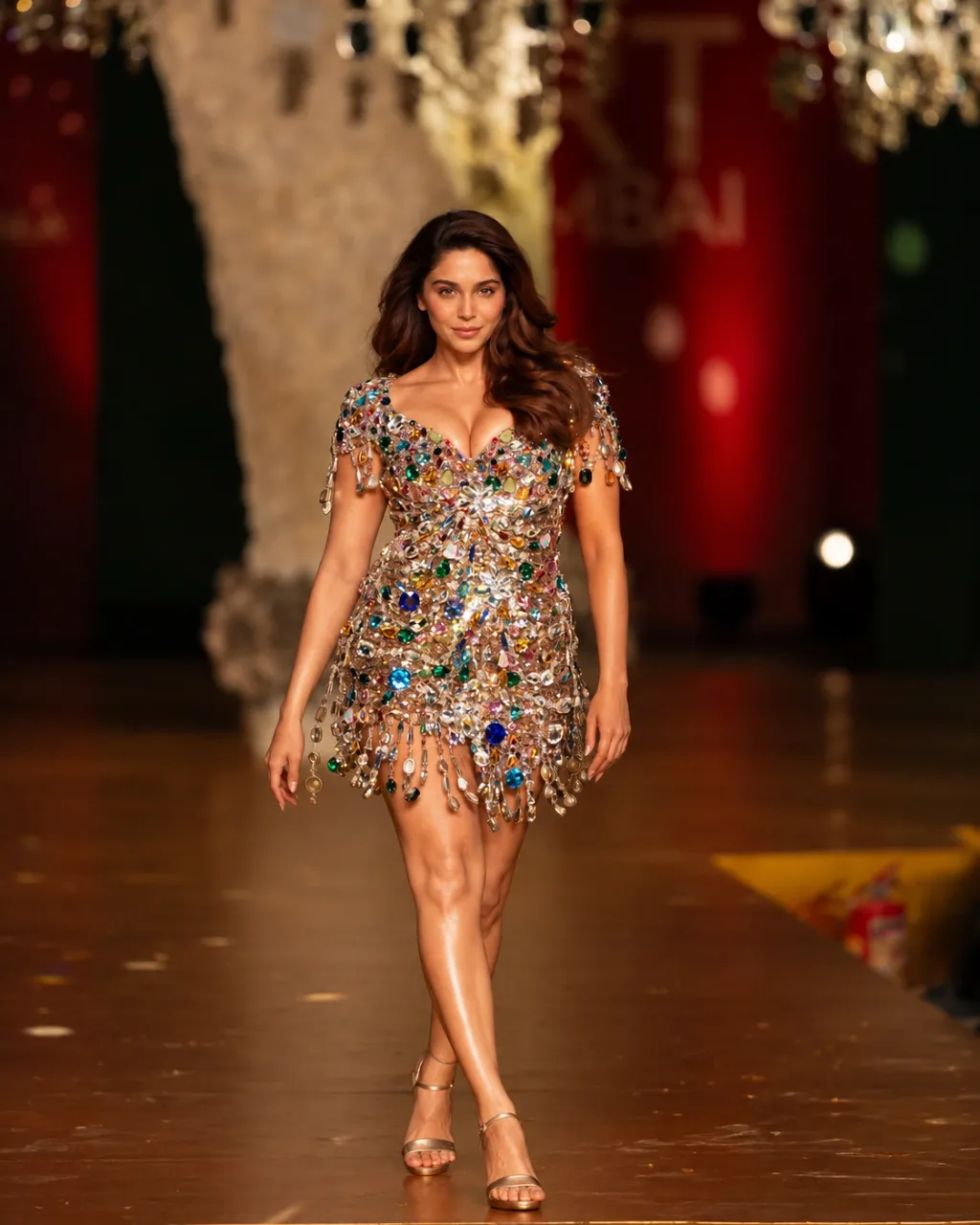
The mini dress reflected the more playful side of Disco Inferno. Its short silhouette, bright colours and glittering details were familiar elements of disco fashion, while the intricate stonework gave it a couture finish.
Red Concept Saree for the Finale
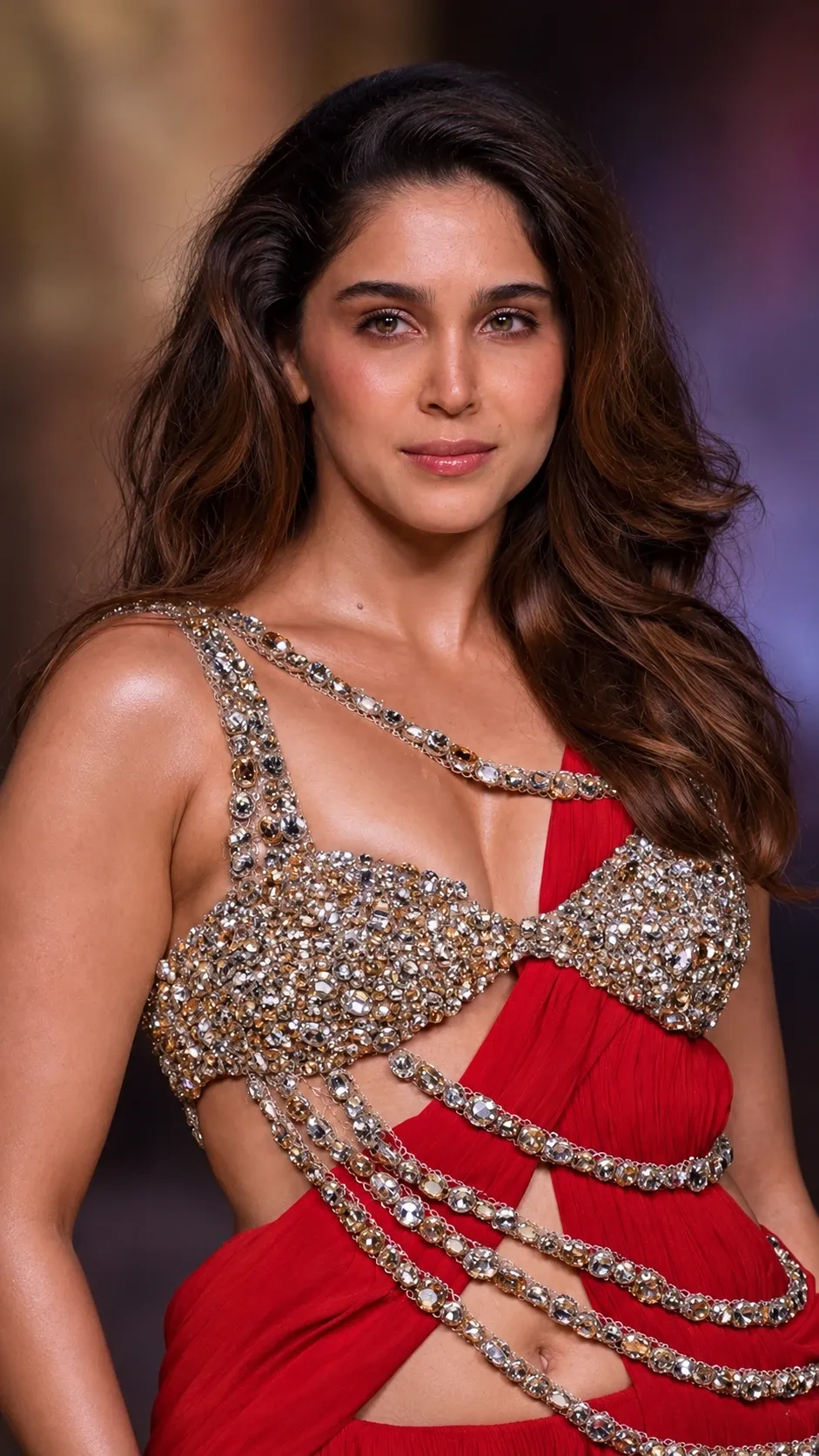
For her final appearance, Sharvari changed into a red concept saree with a heavily embellished metallic blouse. Several stone-studded chains crossed her waist, while flowing panels of red fabric formed the lower half of the outfit.
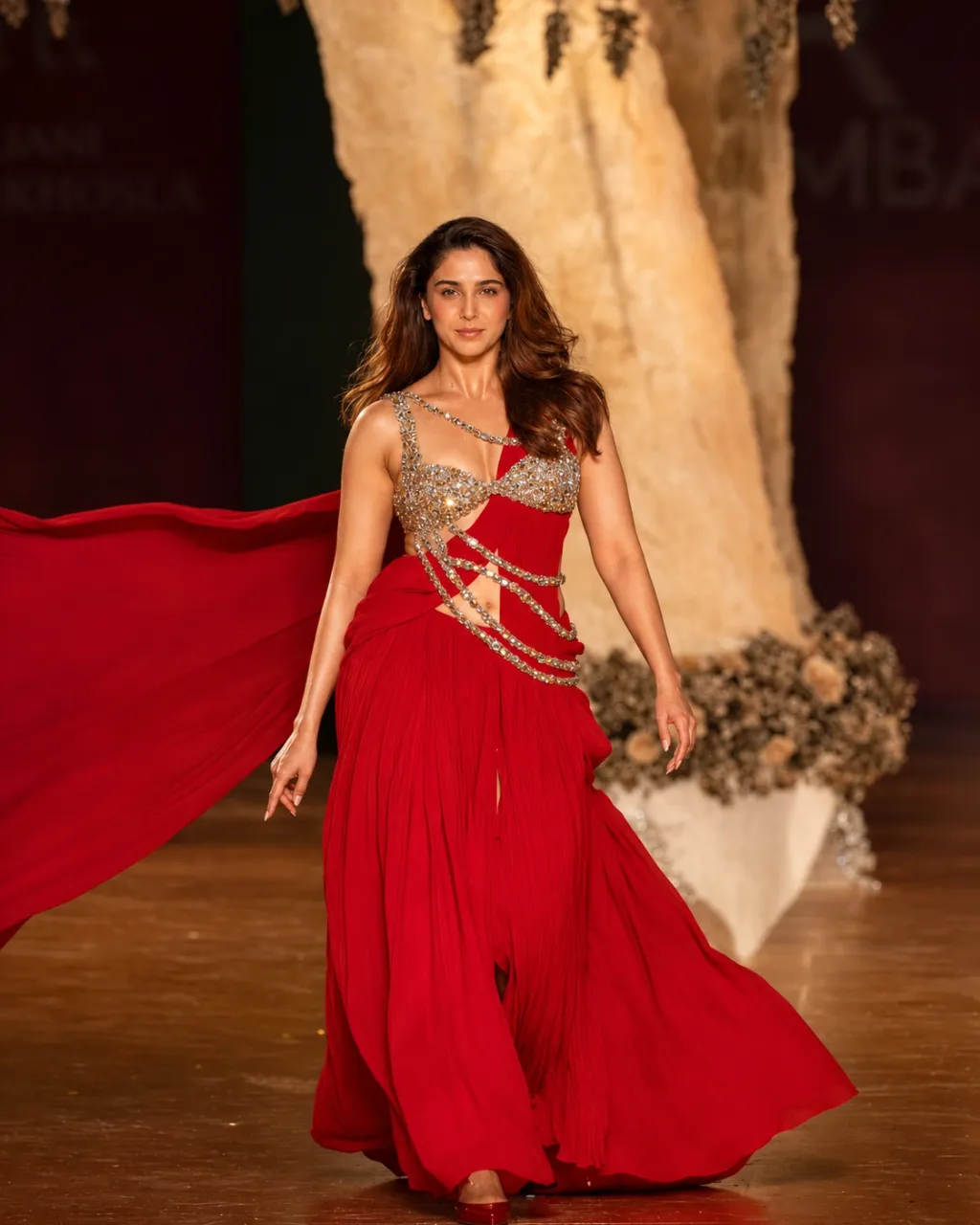
The second outfit was quite different from her opening look. Instead of using several bright colours, it relied mainly on red fabric and metallic embellishments.
The blouse was structured and fitted, while the pleated fabric below it moved more freely.
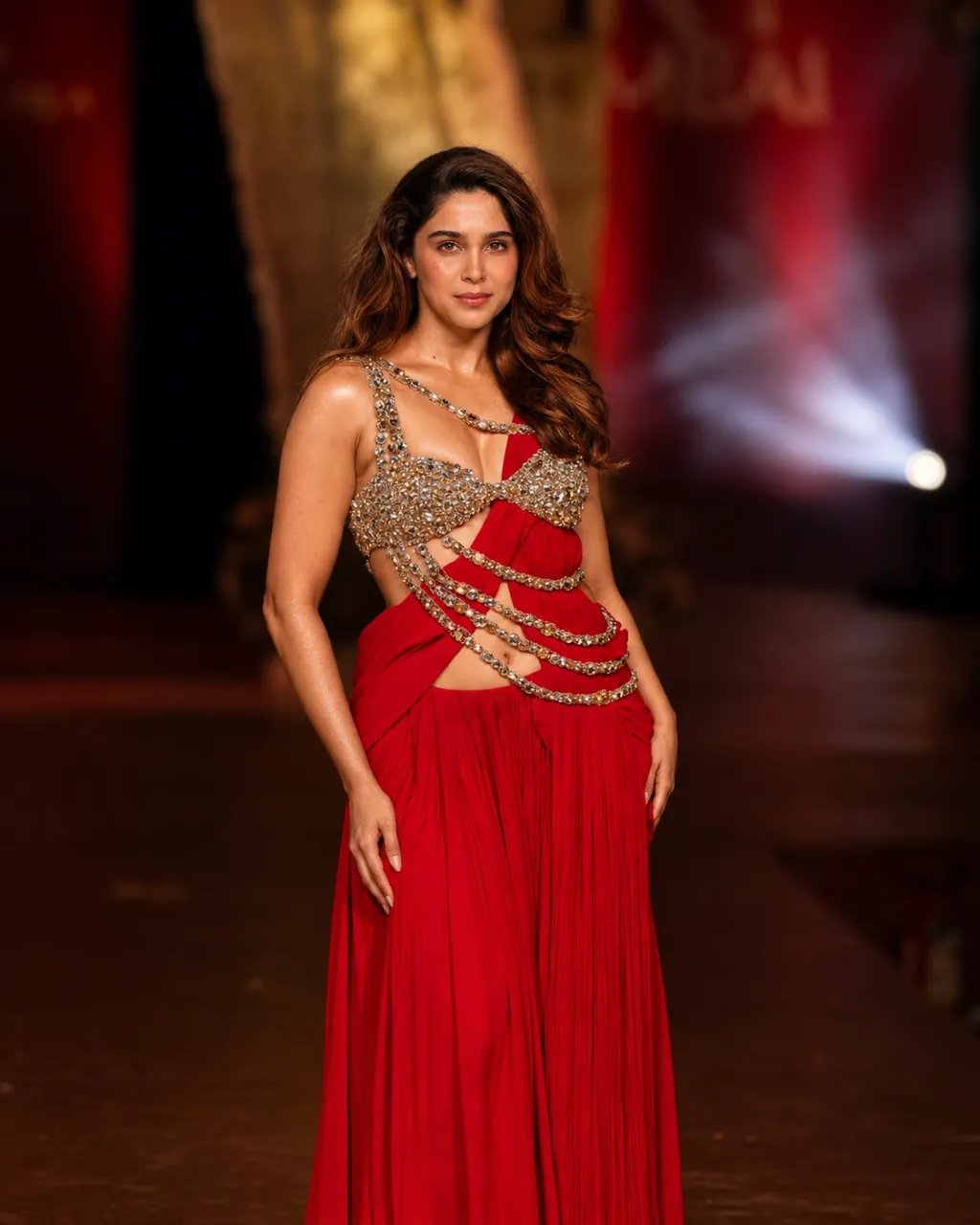
Although described as a concept saree, the outfit didn't follow conventional saree draping. The designers used cutouts, layered stone chains and a fitted upper section to give the traditional silhouette a more contemporary shape.
The long red drape added movement, particularly as Sharvari walked down the runway.
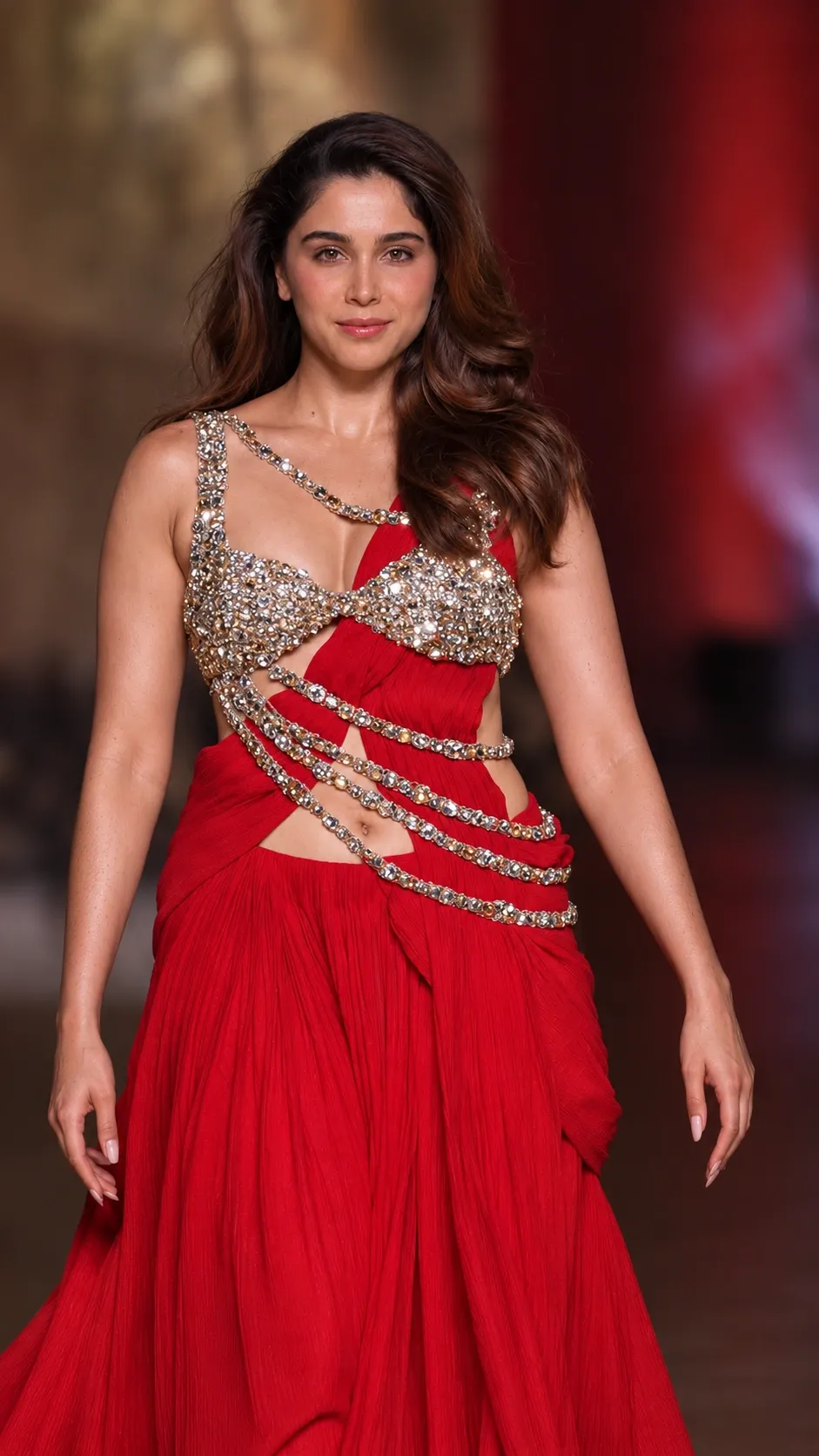
Much of the detailing was concentrated around the blouse and waist. The chains crossed the fabric at different angles, leaving spaces between them where the red draping remained visible.
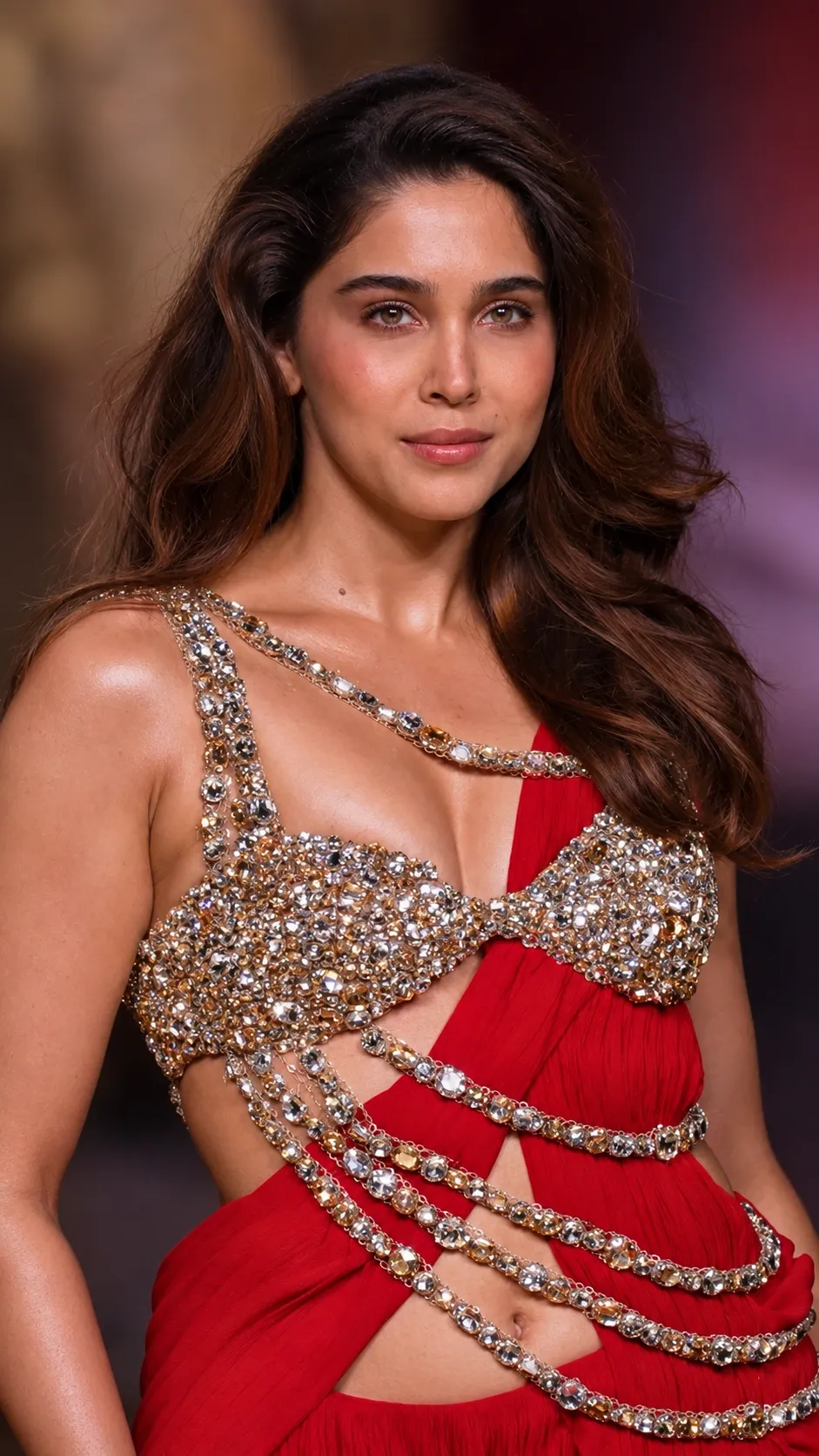
The contrast between the materials was one of the more noticeable parts of the outfit. The blouse had a firm, heavily embellished appearance, while the fabric underneath was much softer.
Sharvari also joined Abu Jani and Sandeep Khosla on the runway for the finale. The three shared a dance, bringing the disco theme into the closing moments of the show.
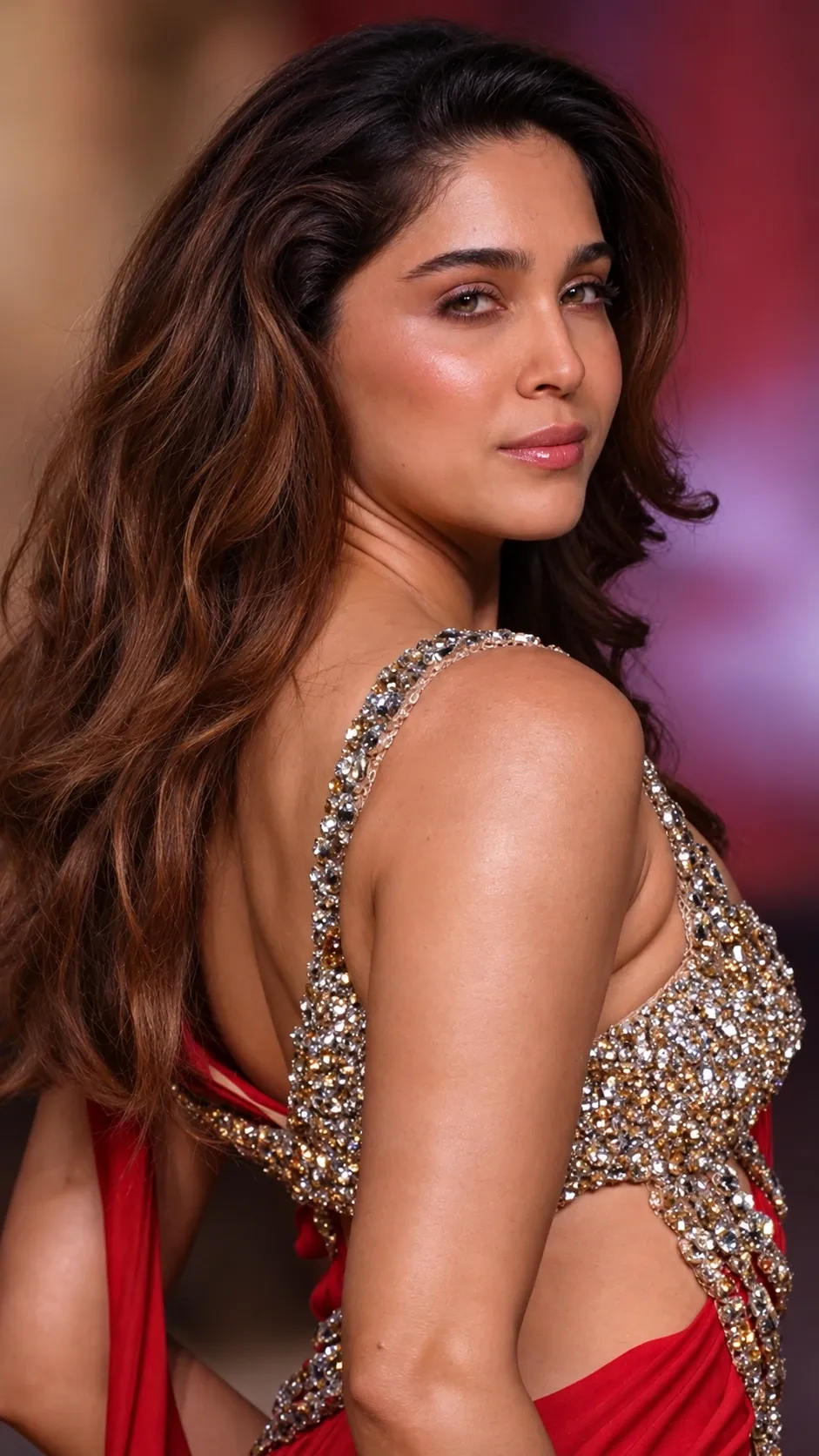
Her two outfits showed different approaches to the same collection. The mini dress was colourful and playful, while the red concept saree focused more on draping, movement and the contrast between fabric and embellishment.
Disco Inferno Was More Than Just a Fashion Show
The collection wasn't limited to Sharvari's two looks.
Abu Jani and Sandeep Khosla also revisited their Raj and Greta collections. While Raj moved beyond its usual beige and gold palette, Greta featured sequins and cut-dana embroidery in jewel tones.
The wider collection included draped sarees, embellished bustiers, kaftans, open jackets and experimental menswear.
Some of the men's outfits featured denim patchwork, velvet appliqué, pearls and colourful stones. The designers also introduced ranges including Disco, Origami, Inca, Badla and Modern.
The venue had its own share of decorations. A Wonder Room, the designers' art and décor division, transformed Mahalaxmi Racecourse with lighting and disco balls.
One of the main attractions was a 20-foot-tall elephant-inspired installation named ‘Rani’. Decorated with mirror work, gota and disco balls, it paid tribute to Mumbai's Rani Baug and the city where the designers first met.
Music was also an important part of the evening. Instead of relying only on familiar disco tracks, the show featured an original soundtrack composed by music director Sahil Bhatia.
The soundtrack ran for nearly 35 minutes and included contributions from several singers and musicians.
More than 100 models and dancers took part in the presentation. Jaya Bachchan, Ahsaas Channa and Ananya Birla were among those in attendance.
40 Years of Design
Disco Inferno came a few months after Abu Jani and Sandeep Khosla celebrated 40 years of their fashion house in August 2026.
The anniversary also saw the launch of Mubarak Baug, their new flagship store, and Iconic Jewels, their debut jewellery line.
The Art Mumbai presentation gave the designers another opportunity to revisit their earlier work while experimenting with colours, fabrics and silhouettes.
It was also part of a larger event. Art Mumbai 2026 is being held at Mahalaxmi Racecourse from November 12 to 15, bringing together 94 galleries from India and abroad, alongside exhibitions, talks and performances. The opening day was invitation-only, with public admission beginning on November 13.
For Sharvari, the evening meant two very different runway appearances. She began in a short, colourful dress covered in crystals and finished in a flowing red ensemble that mixed traditional draping with modern construction.
Both looks relied heavily on embellishments, but used them differently. The mini dress made the crystals the main attraction, while the red concept saree combined them with flowing fabric.
That contrast was what made the two appearances interesting. The designers brought back the glamour of an earlier era without simply recreating the clothes of that time.